Hi Readers: Now that the 2007 Accidents/Incidents have passed, we'll see what 2008 will do. Better, we hope. Not that I have aircraft accidents on my mind all the time, or having been an NTSB Investigator of accidents in the past, but every now and then I think of the needless and sorrowful accidents that occur. One that comes to mind is the Payne Stewart Learjet 35 fatal accident of 11-10-00.
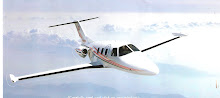
Payne Stewart was not only an excellent golfer, but a good person and a family man. Along with his fatal journey in an proven jet aircraft, 4 others were taken with him. Why? Principally, because somebody, the pilot or others, failed to check the pressurization or oxygen system, or use the checklist, prior to takeoff. The 5 occupants departed Orlando, FL in the Learjet for a Texas Golf Tournament. Air Traffic Controllers and U.S. Air Force Fighter jets watched the jet travel across country, as high as 45,000 feet, out of control, before it finally came down near Aberdeen, South Dakota, apparently out of fuel. After takeoff and 20 minutes into the flight, there was no communication with or response from the pilots. It was assumed that a pressurization problem existed and that all occupants succumbed to oxygen deprivation after takeoff at altitude.
New subject - Who must you allow to see your pilot and medical certificates on demand?
1. The FAA Administrator
2. An authorized representative of the NTSB.
3. Any federal, state, or local law enforcement officer.
4. An authorized representative of the Transportation Security Administration.
However, do not allow the certificates to leave your possession in any circumstance, and require the questioner to produce identification.
Marginal weather will be coming up next.
Thanks for listening. R.S.
Showing posts with label altitude. Show all posts
Showing posts with label altitude. Show all posts
Monday, January 14, 2008

Tuesday, November 20, 2007
Aircraft Icing
Hi Readers: Now that we are in the winter weather of the year, we must all face the fact that, for flying, icing conditions on the ground or in the air is upon us (although icing conditions can occur in flight at any time of the year depending on the weather systems). Icing conditions on the ground before flight without de-icing is dangerous (and foolhardy) and icing conditions at altitude without de-icing and anti-icing are dangerous and lethal. In flight, icing can cause rapid loss of altitude and/or loss of control in minutes. If your airplane is not equipped with de-icing and anti-icing gear, or not certified for flight in icing conditions, its your knowledge and good judgment of the weather against nature.
Although I won't dwell on the many aircraft accidents over the years caused by icing, some of the worst fatal accidents have been caused by icing - principally due to our lack of knowledge, our judgment, and lack of anti-icing equipment. General Aviation (GA) and Commuter type (Part 23) airplanes are the most vulnerable since they are flown at the lower altitudes where icing conditions occur, and most of the airplanes are not equipped with ice-prevention gear or the intention of flight was not to encounter weather conditions.
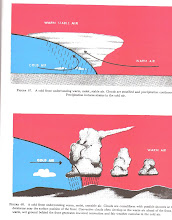
How, then, does inflight icing occur? Well, we have to be flying in, around, or through stratus and cumulonimbus clouds containing water droplets at or nearing freezing temperatures, and nature takes care of the rest. There can be induction icing - ice forming around the engine air intake (particularly bad for jet engines since ice will form in chunks which may be ingested) or structural icing, either as clear or rime ice, formed when supercooled water droplets impact the wing and control surfaces (top and bottom) freezing in a solid sheet of ice or in a irregular shape - usually between zero degrees and minus 10 degrees centigrade. Such icing has been encountered in a cumulonimbus cloud at temperatures down to minus 25 degrees centigrade. Mixed icing, clear and rime ice, which result in an irregular shape on airfoils, can occur while flying through snow, ice pellets, or small hail.
The effects of ice on the airplane are cumulative - thrust is reduced, drag increases, lift lessens, and weight increases. The combined results are an increase in stall speed and a deterioration of airplane performance. In extreme cases, 2" to 3" of ice can form on the leading edge of an airfoil in less than 5 minutes.
A recent Cessna 208 Caravan accident near Mt. Ranier, Washington, reminds us that icing problems are still with us, in spite of de-icing and anti-icing equipment, along with GPS and digital instruments. The NTSB and Cessna Aircraft are still investigating.
In Airline and Part 121 flying (all IFR flight plans), cancellations and delays due to icing conditions can cost millions of dollars in one day. The cost of de-icing fluid, at a cost of 3 to 4 dollars/gallon adds to their problems. Part 121 operations covers the transport aircraft icing conditions. Part 135 and 91 flying is covered under 135.227 and 91.527.
NASA, FAA, and NTSB have been conducting research on aircraft icing problems over the years (see applicable icing FAA Advisory Circulars) and as of 6-1-07 the FAA was still working on a proposed rulemaking (Docket #FAA-2007-27654), titled Activation of Ice Protection, applying, principally, to Part 25 Transport Category airplanes. (It is hoped that FAA will follow with Part 23 aircraft). Under the proposal, Aircraft Manufacturers would be required to add an ice-detection and activation system to the present de-ice and anti-ice systems, and mandate that the protection system operate automatically and continuously. I think there is going to be a lot of discussion on this proposal.
How to avoid flying in icing conditions? For GA and Commuter aircraft, use all available weather services and reports to pinpoint icing areas and then plan on avoiding them. If you encounter icing conditions at altitude, use your available de-icing and anti-icing equipment immediately, change altitude up or down, and/or make a change in course (not necessarily 180 degrees since the true direction of the weather system is not known). Leave the autopilot off. Replan your flight or land at the nearest available airport (that will accommodate your airplane) and wait it out.
Proper preflight action includes, on filing an IFR flight plan, determining the freezing level and the levels above and below for weather precipitation areas. If your flight route penetrates the freezing level, request a new altitude or route. Make use of appropriate SIGMETS, AIRMETS, and PIREPS, and any other source of inflight weather advisory in planning and executing en route flight. In general, make a habit of checking FAA Advisory Circulars - FAAs method of advising new developments or action on pertinent problems.
Thanks for listening and Happy Thanksgiving! R.S.
Although I won't dwell on the many aircraft accidents over the years caused by icing, some of the worst fatal accidents have been caused by icing - principally due to our lack of knowledge, our judgment, and lack of anti-icing equipment. General Aviation (GA) and Commuter type (Part 23) airplanes are the most vulnerable since they are flown at the lower altitudes where icing conditions occur, and most of the airplanes are not equipped with ice-prevention gear or the intention of flight was not to encounter weather conditions.
How, then, does inflight icing occur? Well, we have to be flying in, around, or through stratus and cumulonimbus clouds containing water droplets at or nearing freezing temperatures, and nature takes care of the rest. There can be induction icing - ice forming around the engine air intake (particularly bad for jet engines since ice will form in chunks which may be ingested) or structural icing, either as clear or rime ice, formed when supercooled water droplets impact the wing and control surfaces (top and bottom) freezing in a solid sheet of ice or in a irregular shape - usually between zero degrees and minus 10 degrees centigrade. Such icing has been encountered in a cumulonimbus cloud at temperatures down to minus 25 degrees centigrade. Mixed icing, clear and rime ice, which result in an irregular shape on airfoils, can occur while flying through snow, ice pellets, or small hail.
The effects of ice on the airplane are cumulative - thrust is reduced, drag increases, lift lessens, and weight increases. The combined results are an increase in stall speed and a deterioration of airplane performance. In extreme cases, 2" to 3" of ice can form on the leading edge of an airfoil in less than 5 minutes.
A recent Cessna 208 Caravan accident near Mt. Ranier, Washington, reminds us that icing problems are still with us, in spite of de-icing and anti-icing equipment, along with GPS and digital instruments. The NTSB and Cessna Aircraft are still investigating.
In Airline and Part 121 flying (all IFR flight plans), cancellations and delays due to icing conditions can cost millions of dollars in one day. The cost of de-icing fluid, at a cost of 3 to 4 dollars/gallon adds to their problems. Part 121 operations covers the transport aircraft icing conditions. Part 135 and 91 flying is covered under 135.227 and 91.527.
NASA, FAA, and NTSB have been conducting research on aircraft icing problems over the years (see applicable icing FAA Advisory Circulars) and as of 6-1-07 the FAA was still working on a proposed rulemaking (Docket #FAA-2007-27654), titled Activation of Ice Protection, applying, principally, to Part 25 Transport Category airplanes. (It is hoped that FAA will follow with Part 23 aircraft). Under the proposal, Aircraft Manufacturers would be required to add an ice-detection and activation system to the present de-ice and anti-ice systems, and mandate that the protection system operate automatically and continuously. I think there is going to be a lot of discussion on this proposal.
How to avoid flying in icing conditions? For GA and Commuter aircraft, use all available weather services and reports to pinpoint icing areas and then plan on avoiding them. If you encounter icing conditions at altitude, use your available de-icing and anti-icing equipment immediately, change altitude up or down, and/or make a change in course (not necessarily 180 degrees since the true direction of the weather system is not known). Leave the autopilot off. Replan your flight or land at the nearest available airport (that will accommodate your airplane) and wait it out.
Proper preflight action includes, on filing an IFR flight plan, determining the freezing level and the levels above and below for weather precipitation areas. If your flight route penetrates the freezing level, request a new altitude or route. Make use of appropriate SIGMETS, AIRMETS, and PIREPS, and any other source of inflight weather advisory in planning and executing en route flight. In general, make a habit of checking FAA Advisory Circulars - FAAs method of advising new developments or action on pertinent problems.
Thanks for listening and Happy Thanksgiving! R.S.
Sunday, July 1, 2007
Unusual Attitudes - Stalls - Spins
Unusual attitudes in your airplane are perhaps self-explanatory, an extreme departure from straight and level flight - not all that serious since the airplane is not stalled. An unusual attitude can lead to a stall and to a spin. The FARs (Federal Air Regulations) require knowledge and proficiency in unusual attitudes and stalls.
A spin is a maneuver , intentionally or unintentionally performed, beginning with the stall of the airplane at level flight (although the stall and entry can occur in unusual positions) followed by rotation or gyrations from its horizontal, vertical, and lateral axises. But let's not get too technical - the important thing is to recognize what it is and how to recover to straight and level flight. Why? Because a stall or spin can occur at low altitude or in the traffic pattern, without sufficient altitude to recover.
In our discussion, let's separate the stall from the spin. After all, the stall is necessary to a good landing - we encounter stalls every time we fly. When the airplane stalls, it quits flying, and unless you are already touching the runway, it takes maybe several hundred feet to recover.
The spin is a different "kettle of fish". Dangerous? Yes and no. It means you've lost total control of the airplane. If you don't initiate immediate recovery, it's dangerous. If the spin is allowed past three turns or stays inverted, the spin (flat spin) may become unpredictable or unrecoverable. Each airplane is different. Large airplanes are not meant to be spinned, and the Manufacturer of the airplane must state in the Airplane Flight Manual whether spins are prohibited. If prohibited, don't spin the airplane. If you get into a spin inadvertently, the Manufacturer will advise as follows: Move the throttle to IDLE, the ailerons to Neutral, then full opposite RUDDER, followed by control stick or control wheel FORWARD. When the rotation stops, neutralize both rudder and stick.
The procedure for recovery from a spin, then, is similar in most Airplane Handbooks of the typical GA small airplane:
1. Power off.
2. Opposite rudder.
3. Contol stick forward (to break the stall.
4. Ailerons neutral.
5. Check attitude and upset of instruments.
Without getting into aerodynamics, we have stopped the rotation of the spin, unstalled the airplane, and restored level flight. Very simple, yes? But in rotating the airplane, we are looking at the background moving in the opposite direction, at an angle. So we must keep in mind the direction of the spin (the heavy foot will indicate the direction to stop the turn of rotation). If the rotation is not stopped, the spin may become aggravated and more altitude will be lost since the airplane is still stalled.
The FARs do not require spin demonstration or proficiency by private or commercial pilots. Instructor pilots, for all ratings, are required to be proficient in spins.
Should you be demonstrated spins? In my opinion spins should be discussed and demonstrated by Instructor pilots for the new pilot, for many obvious reasons. The demonstration should actually begin with unusual attitudes, leading to stalls and spins, followed by recovery procedures, and ending with Do's and Don'ts.
The pilot, at any time, may encounter an upset or unusual attitude leading to a stall/spin, requiring an immediate recovery response, particularly on instrument flight. Jet vortices or violent air turbulence can cause an upset, totally unexpected, requiring immediate recovery.
Should you practice spins? Again, Yes or No. If spins are permitted in the airplane and you feel comfortable knowing that airplane and what it can do (that is, steep climbing or dscending turns, recovery of stalls, perhaps a split "S", etc.) , I would say yes. If not, wait until you have more time in the airplane.
If you do practice spins, climb to 5,000 feet or more, outside of the city and away from a known traffic area, so that you have sufficient altitude and space to recover. Make sure that your airplane is properly balanced, make recovery movements precise and positive (no hesitation). The altitude loss of a typical GA airplane for a one-turn spin, including recovery, is about 1,200 feet - but don't count on it.
I could cite you a dozen set of statistics regarding aircraft accidents involving spins. The bulk of these accidents usually do not involve the spin maneuver itself. The numbers will not help you - the recommendations will. There is no need to be apprehensive about spins. If you know your airplane well, have perhaps several hundred flying hours, follow the flight rules, and know the recovery procedures without hesitation, I would say practice your spins. I think it is far better to know how to stay out of trouble than to blindly look at trouble for the first time. RS.
A spin is a maneuver , intentionally or unintentionally performed, beginning with the stall of the airplane at level flight (although the stall and entry can occur in unusual positions) followed by rotation or gyrations from its horizontal, vertical, and lateral axises. But let's not get too technical - the important thing is to recognize what it is and how to recover to straight and level flight. Why? Because a stall or spin can occur at low altitude or in the traffic pattern, without sufficient altitude to recover.
In our discussion, let's separate the stall from the spin. After all, the stall is necessary to a good landing - we encounter stalls every time we fly. When the airplane stalls, it quits flying, and unless you are already touching the runway, it takes maybe several hundred feet to recover.
The spin is a different "kettle of fish". Dangerous? Yes and no. It means you've lost total control of the airplane. If you don't initiate immediate recovery, it's dangerous. If the spin is allowed past three turns or stays inverted, the spin (flat spin) may become unpredictable or unrecoverable. Each airplane is different. Large airplanes are not meant to be spinned, and the Manufacturer of the airplane must state in the Airplane Flight Manual whether spins are prohibited. If prohibited, don't spin the airplane. If you get into a spin inadvertently, the Manufacturer will advise as follows: Move the throttle to IDLE, the ailerons to Neutral, then full opposite RUDDER, followed by control stick or control wheel FORWARD. When the rotation stops, neutralize both rudder and stick.
The procedure for recovery from a spin, then, is similar in most Airplane Handbooks of the typical GA small airplane:
1. Power off.
2. Opposite rudder.
3. Contol stick forward (to break the stall.
4. Ailerons neutral.
5. Check attitude and upset of instruments.
Without getting into aerodynamics, we have stopped the rotation of the spin, unstalled the airplane, and restored level flight. Very simple, yes? But in rotating the airplane, we are looking at the background moving in the opposite direction, at an angle. So we must keep in mind the direction of the spin (the heavy foot will indicate the direction to stop the turn of rotation). If the rotation is not stopped, the spin may become aggravated and more altitude will be lost since the airplane is still stalled.
The FARs do not require spin demonstration or proficiency by private or commercial pilots. Instructor pilots, for all ratings, are required to be proficient in spins.
Should you be demonstrated spins? In my opinion spins should be discussed and demonstrated by Instructor pilots for the new pilot, for many obvious reasons. The demonstration should actually begin with unusual attitudes, leading to stalls and spins, followed by recovery procedures, and ending with Do's and Don'ts.
The pilot, at any time, may encounter an upset or unusual attitude leading to a stall/spin, requiring an immediate recovery response, particularly on instrument flight. Jet vortices or violent air turbulence can cause an upset, totally unexpected, requiring immediate recovery.
Should you practice spins? Again, Yes or No. If spins are permitted in the airplane and you feel comfortable knowing that airplane and what it can do (that is, steep climbing or dscending turns, recovery of stalls, perhaps a split "S", etc.) , I would say yes. If not, wait until you have more time in the airplane.
If you do practice spins, climb to 5,000 feet or more, outside of the city and away from a known traffic area, so that you have sufficient altitude and space to recover. Make sure that your airplane is properly balanced, make recovery movements precise and positive (no hesitation). The altitude loss of a typical GA airplane for a one-turn spin, including recovery, is about 1,200 feet - but don't count on it.
I could cite you a dozen set of statistics regarding aircraft accidents involving spins. The bulk of these accidents usually do not involve the spin maneuver itself. The numbers will not help you - the recommendations will. There is no need to be apprehensive about spins. If you know your airplane well, have perhaps several hundred flying hours, follow the flight rules, and know the recovery procedures without hesitation, I would say practice your spins. I think it is far better to know how to stay out of trouble than to blindly look at trouble for the first time. RS.
Tuesday, May 15, 2007
VFR Flying AT Night
VFR flying at night has its hazards, especially for the beginning private pilot - hazards that are not easily recognized and appear rather suddenly - especially transitioning from day flight to night flight.
Okay, what is night flight? Let's start with FAA's perception of night flight as detailed in
Part 61.57 of th FAA Regulations - "the time between the end of evening civil twilight and the beginning of morning civil twilight, as published in the American Air Almanac, coverted to local time".
Okay, then, what is twilight? On the ground (or airport) twilight is the time between sunset and complete darkness.
At altitude twilight appears as daylight until the sun disappears from your vision. With no clouds you can see the sun setting while you are still in bright daylight (it's a beautiful sight). You keep flying and all of a sudden the sun has disappeared and you are in darkness. There may be lights but (surprise, surprise) your horizon has disappeared. You must now refer to your instruments.
The important thing to recognize and remember is that night flight requires a reference to the ground and the horizon (airport beacons, city lights, airway lights, etc.) to maintain level flight. If you lose that reference, you must use your instruments (attitude and directional displays).
The transition from daylight to darkness in flight can be unsettleing if you havent given it prior thought. Normally, the pilot does not think about night flying being a problem since he is already busy with communications and en route and weather considerations. But, let me advise you, on cross-country flights you will find some areas in complete darkness, requiring flight solely by instruments.
And before long - you will probably decide to get your instrument rating.
Okay, what is night flight? Let's start with FAA's perception of night flight as detailed in
Part 61.57 of th FAA Regulations - "the time between the end of evening civil twilight and the beginning of morning civil twilight, as published in the American Air Almanac, coverted to local time".
Okay, then, what is twilight? On the ground (or airport) twilight is the time between sunset and complete darkness.
At altitude twilight appears as daylight until the sun disappears from your vision. With no clouds you can see the sun setting while you are still in bright daylight (it's a beautiful sight). You keep flying and all of a sudden the sun has disappeared and you are in darkness. There may be lights but (surprise, surprise) your horizon has disappeared. You must now refer to your instruments.
The important thing to recognize and remember is that night flight requires a reference to the ground and the horizon (airport beacons, city lights, airway lights, etc.) to maintain level flight. If you lose that reference, you must use your instruments (attitude and directional displays).
The transition from daylight to darkness in flight can be unsettleing if you havent given it prior thought. Normally, the pilot does not think about night flying being a problem since he is already busy with communications and en route and weather considerations. But, let me advise you, on cross-country flights you will find some areas in complete darkness, requiring flight solely by instruments.
And before long - you will probably decide to get your instrument rating.
Subscribe to:
Posts (Atom)