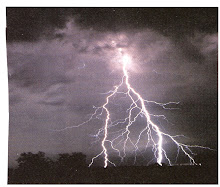
Hi Readers: Did you know that you can tell how far away a thunderstorm is from your position? Follow the lightning you see, count the seconds until you hear thunder. Then multiply your seconds times 1,128 - the speed of sound in ft/sec.
Moving on to Wind Shear. The subject, not all that well known to pilots and operators; and probably one of the most studied weather-related occurrences over the years, yet remaining highly misunderstood. In fact, the awareness factor is alarming. We have only to follow the thunderstorm and tornado reports, those originating from tropical air in the Southwest moving across the South and Midwest of the U.S., and the increased frequency of these storms in the past several years to find the source of our wind shear. Not that it doesn't occur in other areas of the world.
Wind shear is one of the more important weather-related occurrences, convective-type initiations; separate and distinct from known air turbulence, wake turbulence, mountain wave, jetwash, etc., that we should be aware of and include in our flight planning. Wind shear is directly related to downdrafts, microbursts, and convective vortex movements of air. The simple definition of wind shear is a sudden, drastic shift in winds speed, direction, or both in a horizontal and vertical plane. It's dangerous at any altitude, and particularly during surface operations such as approach, landing and takeoff. It can happen in airline or GA operations, VFR or IFR conditions, notably in connection with a cumulo-nimbus cloud or a thunderstorm.
Our cognizance of the hazards of wind shear must become full blown - the suddenness, the safety, and the fatal aspects are alarming; and the size and extent of the hazards are strictly after the fact.
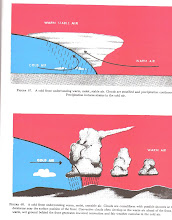
Let's start with the accepted fact that wind shear per se is hazardous and dangerous to flight by fact and experience. And, by nature, it is associated with convective air movements such as a thunderstorm, a cumulo-nimbus cloud, rain, a snowstorm, and downdrafts producing a microburst of air which sets up the wind shear and ends in a general flattening to the surface with vortex movements at each end. The total effects to airplane control are not instantaneous and can continue and progress from one stage to another; such as an increase or decrease of windspeed, which affects the airplane airspeed, and causes pitch control problems. The wind shear, as analyzed, is actually the result of the strong downdraft of air out of the center of the storm, called the rainshaft (rain or virga). This downdraft, or microburst of air, contacting the surface, then spreads out as much as 5 miles or more, horizontally and vertically, terminated by inward and upward moving vortices ( as explained before). It is estimated that 5% of all thunderstorms produce a microburst.
Indications in the cockpit to detect the microburst and wind shear seem to be the sudden airspeed variation, and the amount, a sudden pitch change, heavy turbulence, and a tendency to yaw or roll. The extent of the occurrence is, of course, unpredictable.
Airline encounters of wind shear have been on approach to land, landing, and takeoff. The typical approach occurrence is best illustrated by a 1985 encounter by Delta Air Lines, Flt 191, an L-1011 airplane, approaching the Dallas-Ft.Worth Intl airport, flying through a thunderstorm rainshaft, in which the developing microburst forced a landing short of the runway, resulting in fire and fatalities.
In another occurrence in 1999, American Air Lines Flt 1420, in attempting a landing at night at Little Rock, Arkansas, flew into a severe thunderstorm and crosswind, losing complete control. Similar circumstances to the Delta encounter occurred.
The typical takeoff and climb situations, encountering a microburst, resulting in wind shear, have similar cockpit indications, pitch control problems, and prevention of adequate climb past the runway.
Wind Shear - PartII will follow with Analysis.
Friday, September 28, 2007

Monday, September 17, 2007
July - August 2007 Aircraft Accidents
Hi Readers: Back from the hospital - a huge bit of vertigo and a spiking blood pressure caught me unawares. Now I'll finish what I started. Looks like July and August 2007 were two months of aircraft accidents and incidents indicating some very bad judgment and failure to follow the rules. The weather played a part, too. NTSB is still investigating.
There were 72 aircraft accidents and 5 incidents in August compared to 199 accidents and 3 incidents in July. The fatal accidents in August totaled 26, with 55 fatalities, compared to 39 fatal accidents, with 73 fatalities (not including the Brazilian airline fiasco, taking 186 lives) in July.
The record for August indicates an improvement until we look at the type and nature of the accidents. And, as we go along, we'll keep in mind the question, "could these accidents and incidents have been prevented?". Although it will take a detailed study and review to know why and how, the answer, of course, is a resounding yes.
The flying hours for each month, which at this point would still be estimated, would indicate a slight increase in the accident rate. The incidents and the fatal accidents, however, give us the insight that we need, since the incident is the beginning of an accident and the fatal accident has reached and passed its reality.
Without going into the details, both the July and August incidents indicated pilot error, local and ground control errors, as well as poor coordination in the taxi, takeoff, and landing operations. All of the operations occured in daylight and during VFR conditions.
The July and August accidents occured worldwide, with the majority being in the continental U.S., with Alaska accounting for 8 accidents in July and 11 accidents in August.
The fatal accidents, particularly in Alaska, are revealing of multiple errors:
Weather Involved: July 2007 - 9 , August 2007 - 4
Pilot Error (Loss of control, etc.): Jul - 13 ; Aug 9
Engine Failure: Jul - 1 ; Aug 2
Experimental / Amateur failures: Jul 1 ; Aug - 5
Unknown / Unreported: Jul - 10 ; Aug - 2
Inflight Fire: Jul 1 ; Aug - 0
Medical Flight: Jul - 1 ; Aug - 1
Suicide: Jul - 0 ; Aug - 1
Uncertificated Flight: Jul - 0; Aug - 1
Helicopter tail rotor failure: Jul - 1 ; Aug - 1
Helicopter collision: Jul - 1 ; Aug - 0
The collision of 2 TV Channel news helicopters in Phoenix, AZ while watching a police persuit on the ground, as unusual as it was, showed inattention in flight and poor coordination of operations (in fact there were a total of five helicopters in the air in the same operation).
There were two fatal Part 135 sightseeing tour accidents out of Ketchikan, Alaska, one in July and one in August, both DeHavilland DHC-2 aircraft. Both directly involving VFR operations in IFR conditions of rain, fog, low clouds, and strong downdrafts. The July accident resulted in 5 fatalities and 4 serious injuries, and the August accident in 5 fatalities.
We will hope for better results in September. Thanks for listening.
RS
There were 72 aircraft accidents and 5 incidents in August compared to 199 accidents and 3 incidents in July. The fatal accidents in August totaled 26, with 55 fatalities, compared to 39 fatal accidents, with 73 fatalities (not including the Brazilian airline fiasco, taking 186 lives) in July.
The record for August indicates an improvement until we look at the type and nature of the accidents. And, as we go along, we'll keep in mind the question, "could these accidents and incidents have been prevented?". Although it will take a detailed study and review to know why and how, the answer, of course, is a resounding yes.
The flying hours for each month, which at this point would still be estimated, would indicate a slight increase in the accident rate. The incidents and the fatal accidents, however, give us the insight that we need, since the incident is the beginning of an accident and the fatal accident has reached and passed its reality.
Without going into the details, both the July and August incidents indicated pilot error, local and ground control errors, as well as poor coordination in the taxi, takeoff, and landing operations. All of the operations occured in daylight and during VFR conditions.
The July and August accidents occured worldwide, with the majority being in the continental U.S., with Alaska accounting for 8 accidents in July and 11 accidents in August.
The fatal accidents, particularly in Alaska, are revealing of multiple errors:
Weather Involved: July 2007 - 9 , August 2007 - 4
Pilot Error (Loss of control, etc.): Jul - 13 ; Aug 9
Engine Failure: Jul - 1 ; Aug 2
Experimental / Amateur failures: Jul 1 ; Aug - 5
Unknown / Unreported: Jul - 10 ; Aug - 2
Inflight Fire: Jul 1 ; Aug - 0
Medical Flight: Jul - 1 ; Aug - 1
Suicide: Jul - 0 ; Aug - 1
Uncertificated Flight: Jul - 0; Aug - 1
Helicopter tail rotor failure: Jul - 1 ; Aug - 1
Helicopter collision: Jul - 1 ; Aug - 0
The collision of 2 TV Channel news helicopters in Phoenix, AZ while watching a police persuit on the ground, as unusual as it was, showed inattention in flight and poor coordination of operations (in fact there were a total of five helicopters in the air in the same operation).
There were two fatal Part 135 sightseeing tour accidents out of Ketchikan, Alaska, one in July and one in August, both DeHavilland DHC-2 aircraft. Both directly involving VFR operations in IFR conditions of rain, fog, low clouds, and strong downdrafts. The July accident resulted in 5 fatalities and 4 serious injuries, and the August accident in 5 fatalities.
We will hope for better results in September. Thanks for listening.
RS
Wednesday, September 5, 2007
CTAF and UNICOM
Hi readers: There has always been a certain amount of confusion regarding CTAF and UNICOM as to purpose, use, and where to find the information on both. Well, it has to do with in and out traffic and flight safety at and in the vicinity of airports operating without a control tower.
Why is this so important? It is essential that all pilots be aware of and communicate with other traffic when approaching, departing, and in the vicinity of an airport without a tower since all the aircraft may not have a communications ability. To achieve the highest degree of safety, all of the radio-equipped aircraft must transmit and receive on a common frequency for advisories. CTAF (Common Traffic Advisory Frequency) is the frequency that must be used for this purpose. The CTAF's for each airport are listed on aeronautical charts or in the FAA Airport Facility Directory or in other appropriate publications. The CTAF can be obtained by contacting any FSS (Flight Service Station), and you can communicate on a UNICOM frequency or a published CTAF.
What is UNICOM? UNICOM is a nongovernmental air/ground radio communications station which may provide airport information for public use airports where there is no tower or FSS. UNICOM stations provide pilots (on request) with weather information, wind direction, the recommended runway, and other necessary information. If the UNICOM frequency is designated as the CTAF, it will be be identified in the appropriate aeronautical publication.
If an airport has a tower and it is temporarily closed or operated on a part-time basis and there is no FSS on the airport or the FSS is closed, then the pilot must announce his position and intentions on the CTAF. Where there is no tower, FSS, or UNICOM station on the airport, a MULTICOM frequency of 122.9 is used for self-announce procedures. If there is no tower, but a FSS is open, you can communicate with the FSS on the CTAF. In retrospect, the CTAF may be a UNICOM, MULTICOM, FSS, or tower frequency, which all can be found in the aforementioned directory.
There are established, recommended traffic advisory practices in FAR, Chapter 4: Air Traffic Control, that pilots should note and use.
CTAF and UNICOM are very important, also, to all pilots in flight since an emergency can always occur and the need to communicate with an airport becomes very necessary.
Why is this so important? It is essential that all pilots be aware of and communicate with other traffic when approaching, departing, and in the vicinity of an airport without a tower since all the aircraft may not have a communications ability. To achieve the highest degree of safety, all of the radio-equipped aircraft must transmit and receive on a common frequency for advisories. CTAF (Common Traffic Advisory Frequency) is the frequency that must be used for this purpose. The CTAF's for each airport are listed on aeronautical charts or in the FAA Airport Facility Directory or in other appropriate publications. The CTAF can be obtained by contacting any FSS (Flight Service Station), and you can communicate on a UNICOM frequency or a published CTAF.
What is UNICOM? UNICOM is a nongovernmental air/ground radio communications station which may provide airport information for public use airports where there is no tower or FSS. UNICOM stations provide pilots (on request) with weather information, wind direction, the recommended runway, and other necessary information. If the UNICOM frequency is designated as the CTAF, it will be be identified in the appropriate aeronautical publication.
If an airport has a tower and it is temporarily closed or operated on a part-time basis and there is no FSS on the airport or the FSS is closed, then the pilot must announce his position and intentions on the CTAF. Where there is no tower, FSS, or UNICOM station on the airport, a MULTICOM frequency of 122.9 is used for self-announce procedures. If there is no tower, but a FSS is open, you can communicate with the FSS on the CTAF. In retrospect, the CTAF may be a UNICOM, MULTICOM, FSS, or tower frequency, which all can be found in the aforementioned directory.
There are established, recommended traffic advisory practices in FAR, Chapter 4: Air Traffic Control, that pilots should note and use.
CTAF and UNICOM are very important, also, to all pilots in flight since an emergency can always occur and the need to communicate with an airport becomes very necessary.
Thursday, August 30, 2007
PIREPS
Hello Readers: Before we get to PIREPS, have you thought about your weight lately? Do you know what your Body Mass Index is? BMI will give you a good indication of where you stand on weight. This through the courtesy of Karen Miller-Kovach, RD, Chief Scientific Officer of Weight Watchers In'l, the formula: Divide your weight, multiplied by 703, by your height in inches squared. You should comeout somewhere between 20 and 30. 20 to 30 - optimal, 25 to 30 - overweight, and 30+ - Obese.
Now the PIREPS - What are they? Get out your Acronym reader.
Pilot reports are inflight, usually en route, weather reports to help other inflight pilots know what is up ahead of them. You can check PIREPS either prior to your takeoff or en route. Or if need be, you can contact the pilot directly to ask his assesment of the weather. Normally you would contact your FSS (Flight Service Station) and get EFAS (En route Flight Advisory Service).
EFAS (Flight Watch) is a service specifically designed to provide, upon pilot request, timely weather information pertinent to type of flight, intended route of flight, and altitude. This service is within the FSS system, and is listed in any Airport/Facility Directory.
FAA, through the air traffic facilities, is required to solicit PIREPS when the following conditions exist - reported or forecast:
1. Ceilings at or below 5,000 ft.
2. Visibility at or below 5 miles - surface or aloft.
3. Thunderstorms and related phenomena.
4. Icing conditions of a light or greater degree.
5. Turbulence of a moderate degree or greater.
6. Wind shear, reported or forecast, and volcanic ash clouds.
Pilots are urged to cooperate and volunteer reports of cloud bases, tops and layers; flight visibility; precipitation; visibilitity restrictions such as haze, smoke, or dust; wind at altitude; and temperature aloft.
PIREPS should be given to EFAS, AFSS/FSS, ARTC (Air Route Traffic Control), and terminal ATC. The EFAS (Flight Watch) facilities, as mentioned, has the specific duty of collecting and exchanging PIREPS with en route aircraft. If pilot are not able to make PIREPS by radio, then the reports should be given to the local FSS upon landing.
Some of the uses of PIREPS areas follows:
ATCT (Tower) uses the reports to expedite the flow of air traffic locally.
AFSS/FSS uses the reports to brief other pilots inflight and en route.
ARTC uses the reports to expedite the flow of en route traffic.
NWS (National Weather Service) uses PIREPS to verify or amend conditions contained in Aviation Forecasts and Advisories, and pilot weather briefings.
There are numerous pages of information in the FARs regarding PIREPS, their importance, and specifically how to prepare and use them. Pilots should take the time to digest this information in the FARs, with the idea of participating in PIREPS. Thanks for listening. R.S.
Now the PIREPS - What are they? Get out your Acronym reader.
Pilot reports are inflight, usually en route, weather reports to help other inflight pilots know what is up ahead of them. You can check PIREPS either prior to your takeoff or en route. Or if need be, you can contact the pilot directly to ask his assesment of the weather. Normally you would contact your FSS (Flight Service Station) and get EFAS (En route Flight Advisory Service).
EFAS (Flight Watch) is a service specifically designed to provide, upon pilot request, timely weather information pertinent to type of flight, intended route of flight, and altitude. This service is within the FSS system, and is listed in any Airport/Facility Directory.
FAA, through the air traffic facilities, is required to solicit PIREPS when the following conditions exist - reported or forecast:
1. Ceilings at or below 5,000 ft.
2. Visibility at or below 5 miles - surface or aloft.
3. Thunderstorms and related phenomena.
4. Icing conditions of a light or greater degree.
5. Turbulence of a moderate degree or greater.
6. Wind shear, reported or forecast, and volcanic ash clouds.
Pilots are urged to cooperate and volunteer reports of cloud bases, tops and layers; flight visibility; precipitation; visibilitity restrictions such as haze, smoke, or dust; wind at altitude; and temperature aloft.
PIREPS should be given to EFAS, AFSS/FSS, ARTC (Air Route Traffic Control), and terminal ATC. The EFAS (Flight Watch) facilities, as mentioned, has the specific duty of collecting and exchanging PIREPS with en route aircraft. If pilot are not able to make PIREPS by radio, then the reports should be given to the local FSS upon landing.
Some of the uses of PIREPS areas follows:
ATCT (Tower) uses the reports to expedite the flow of air traffic locally.
AFSS/FSS uses the reports to brief other pilots inflight and en route.
ARTC uses the reports to expedite the flow of en route traffic.
NWS (National Weather Service) uses PIREPS to verify or amend conditions contained in Aviation Forecasts and Advisories, and pilot weather briefings.
There are numerous pages of information in the FARs regarding PIREPS, their importance, and specifically how to prepare and use them. Pilots should take the time to digest this information in the FARs, with the idea of participating in PIREPS. Thanks for listening. R.S.
Monday, August 27, 2007
Aviation News, Interest, and Careers
Today we have a 3-way message of people making news, promoting interest in aviation, and spreading the word of careers and jobs in the aviation field.
First of all we'll say goodbye to FAA Administrator Marion Blakely - she is to vacate the Administrator post 9-13-07. Enough said. Now, Mr. Bush, let's fill the position with loads of aviation experience and dedication towards solving the current problems in FAA, in all types of flying, and plan for a healthy expansion of aviation demands.
Secondly, I'd like to congratulate young Barrington Irving (23) who flew around the world - solo yet - in a donated Columbia 400 airplane, becoming the youngest person to accomplish such a feat (I learned this from AVWEB's Podcast of 8-24-07). I'm sure it took guts and determination. As reported, Irving is now focusing his efforts on Experience Aviation - an aviation group he founded in 2005 to get people interested in aviation. This is the spark aviation needs and I'm sure we'd like to hear more about him and his group.
I would also like to point out and give credit to AOPA (Aircraft Owner Pilot Association) and it's energetic President Phil Boyer - champion of the rights of GA pilots for the past 15 years - for the dedication to and continued aviation oversite. There are other associations (NBAA, ATA, etc.) that are monitoring our aviation interests, also.
Although AOPA doesn't need me to trumpet their programs (I've been a member for years), I'd like to point out their support of the young people and their desire for careers and jobs in the aviation field. AOPA cites 60+ careers and jobs needed in aviation - not just pilots, all a part of an industry of 1.3 million jobs and $158 billion in annual economic activity.
Some of the career openings cited are Airline and Other Career Pilots, Airline and Airport Operations, Aircraft Manufacturing and Maintenance, Scientific and Technical Services (engineers, architects, cartographers, meteorologists, etc.), Food Service, Law Enforcement, Avionics, and others. I will add Government Service careers such as Air Traffic Controllers in the FAA and Air Safety Investigators in the NTSB.
AOPA has a world of information for the asking - however, you need to become a member ($39/yr.). Your key to membership and a start is a strong interest in aviation and the willingness to learn and work. A good contact is the Pilot Information Center - 1-800-872-2672 or www.aopa.org on your computer. If I can help you get what you need, let me know. Thanks for listening. R.S.
First of all we'll say goodbye to FAA Administrator Marion Blakely - she is to vacate the Administrator post 9-13-07. Enough said. Now, Mr. Bush, let's fill the position with loads of aviation experience and dedication towards solving the current problems in FAA, in all types of flying, and plan for a healthy expansion of aviation demands.
Secondly, I'd like to congratulate young Barrington Irving (23) who flew around the world - solo yet - in a donated Columbia 400 airplane, becoming the youngest person to accomplish such a feat (I learned this from AVWEB's Podcast of 8-24-07). I'm sure it took guts and determination. As reported, Irving is now focusing his efforts on Experience Aviation - an aviation group he founded in 2005 to get people interested in aviation. This is the spark aviation needs and I'm sure we'd like to hear more about him and his group.
I would also like to point out and give credit to AOPA (Aircraft Owner Pilot Association) and it's energetic President Phil Boyer - champion of the rights of GA pilots for the past 15 years - for the dedication to and continued aviation oversite. There are other associations (NBAA, ATA, etc.) that are monitoring our aviation interests, also.
Although AOPA doesn't need me to trumpet their programs (I've been a member for years), I'd like to point out their support of the young people and their desire for careers and jobs in the aviation field. AOPA cites 60+ careers and jobs needed in aviation - not just pilots, all a part of an industry of 1.3 million jobs and $158 billion in annual economic activity.
Some of the career openings cited are Airline and Other Career Pilots, Airline and Airport Operations, Aircraft Manufacturing and Maintenance, Scientific and Technical Services (engineers, architects, cartographers, meteorologists, etc.), Food Service, Law Enforcement, Avionics, and others. I will add Government Service careers such as Air Traffic Controllers in the FAA and Air Safety Investigators in the NTSB.
AOPA has a world of information for the asking - however, you need to become a member ($39/yr.). Your key to membership and a start is a strong interest in aviation and the willingness to learn and work. A good contact is the Pilot Information Center - 1-800-872-2672 or www.aopa.org on your computer. If I can help you get what you need, let me know. Thanks for listening. R.S.
Friday, August 24, 2007
Near - Miss Incident of Jets at LAX
Now that everybody has heard about the near-miss incident of Westjet B-737 and Northwest Airlines Airbus A320 in daylight at Los Angeles airport on 8-16-07, let's take a quick look and see what did happen and why. NTSB is investigating and the factual report will be forthcoming as usual.
A runway incursion or a near-miss? Some, including NTSB are calling it a runway incursion. However, so far the facts reported show that an incursion did not occur. It was definitely an incident, one that could have been disastrous for all. As a pilot I shudder to think what could have happened, and I'm sure the pilots involved have already relived the incident several times since. The passengers - how lucky they were that a collision did not occur. From the nose of the Westjet B-737 to the wingtip of the Northwest Airbus there was all of 37 ft.
So let's sort out the facts (or the reported facts) at this point. The Airbus was cleared for takeoff on Runway 24 L. The Westjet B-737 had just landed on Runway 24R and was positioned on Taxiway Y, wanting to cross Runway 24 L. Reportedly, he was cleared by Ground Control to cross Runway 24L. The Airbus has started takeoff and reached about 155 knots, probably ready to rotate. The B-737 managed to remain clear - we don't know exactly where on Taxiway Y - reportedly crossing the hold short line but not entering Runway 24, either moving or stopped.
The Westjet B-737 had arived from Calgary, Canada carrying 136 passengers and the Northwest Airlines Airbus was taking off with 150 passengers. At this point it appears that the PIC of the Airbus was properly cleared for takeoff by the Tower Controller. ( I do wonder if the PIC observed the the Westjet movements, which would have been ahead of him.)
The PIC of the Westjet would have to been cleared by the Tower Controller to cross Runway 24L - he or the Ist Officer switched to Ground Control without authorization from the Tower Controller during exit on Taxiway Y. The Ground Controller apparently assumed that the Tower Controller had instructed the Westjet to cross Runway24L.
It appears that almost all of the blame lies with the Westjet Captain and the Ground and Tower Controllers. In takeoff and landing operations there is no room for assumptions. The coordination betwen Controllers in the Tower appears lacking and the misunderstanding between the Ground Controller and the Westjet, particularly on the part of the Ground Controller, was primary to the incident. I wonder too, if the ground airport radar in the Tower was functioning for a reference.
In most respects, the misunderstandings shown in the incident remain inexcusable - but they do happen. In fact, they are happening quite frequently over the continental U.S. We'll see what the NTSB Investigators have to say. Thanks for listening. R.S.
A runway incursion or a near-miss? Some, including NTSB are calling it a runway incursion. However, so far the facts reported show that an incursion did not occur. It was definitely an incident, one that could have been disastrous for all. As a pilot I shudder to think what could have happened, and I'm sure the pilots involved have already relived the incident several times since. The passengers - how lucky they were that a collision did not occur. From the nose of the Westjet B-737 to the wingtip of the Northwest Airbus there was all of 37 ft.
So let's sort out the facts (or the reported facts) at this point. The Airbus was cleared for takeoff on Runway 24 L. The Westjet B-737 had just landed on Runway 24R and was positioned on Taxiway Y, wanting to cross Runway 24 L. Reportedly, he was cleared by Ground Control to cross Runway 24L. The Airbus has started takeoff and reached about 155 knots, probably ready to rotate. The B-737 managed to remain clear - we don't know exactly where on Taxiway Y - reportedly crossing the hold short line but not entering Runway 24, either moving or stopped.
The Westjet B-737 had arived from Calgary, Canada carrying 136 passengers and the Northwest Airlines Airbus was taking off with 150 passengers. At this point it appears that the PIC of the Airbus was properly cleared for takeoff by the Tower Controller. ( I do wonder if the PIC observed the the Westjet movements, which would have been ahead of him.)
The PIC of the Westjet would have to been cleared by the Tower Controller to cross Runway 24L - he or the Ist Officer switched to Ground Control without authorization from the Tower Controller during exit on Taxiway Y. The Ground Controller apparently assumed that the Tower Controller had instructed the Westjet to cross Runway24L.
It appears that almost all of the blame lies with the Westjet Captain and the Ground and Tower Controllers. In takeoff and landing operations there is no room for assumptions. The coordination betwen Controllers in the Tower appears lacking and the misunderstanding between the Ground Controller and the Westjet, particularly on the part of the Ground Controller, was primary to the incident. I wonder too, if the ground airport radar in the Tower was functioning for a reference.
In most respects, the misunderstandings shown in the incident remain inexcusable - but they do happen. In fact, they are happening quite frequently over the continental U.S. We'll see what the NTSB Investigators have to say. Thanks for listening. R.S.
Monday, August 20, 2007
The Lost Is Found
Recently, while browsing through the small library where I live, I uncovered a story that I had been seeking for a long time. To wit: How was young Joe Kennedy (eldest son of Joseph and Rose Kennedy, and brother of Jack and Bobby and Ted Kennedy) lost during WWII?
Doris Kearn Goodwin's story - The Fitzgeralds And The Kennedys - an American Saga - published in Readers Digest Todays Best Nonfiction in 1987 told me what I wanted to know.
Joe was commissioned in the Army Air Forces as a B-24 pilot and had already accomplished 39 missions in the European theater and was due to come home in two weeks. But D-Day (Normandy) was coming up and Joe volunteered to stay another month to fly patrols in the PB4Y over the English Channel (Operation Cork). The operation was a success - not a single ship of the invasion fleet was lost to German U-boats.
After D-Day the Germans began propelling V-1 rockets into London from giant concrete bunkers on the French coast. Civilian casualties were high.
A plan was then conceived - PB4Y's would be gutted and loaded with explosives and flown to be targeted to the bunkers. Joe kennedy and copilot Wilford Willy volunteered for the dangerous mission - to fly the airplane across the channel toward the target, Calais, a giant concrete bunker, believed to be the launching site of the V-1 rockets.
The flight was scheduled for August 12 (D-day was June 4, 1944). At 5:52 Joe and Wilford lifted off from the channel in the PB4Y loaded with high explosives. At 6:10 pm, at an altitude of 2,000 ft, Joe engaged the autopilot and called the mother ship to take over. They were to then bailout. At 6:20 pm a huge explosion occurred. Joe and Wilford never made it, and were never found. Real heroes, by any count.
I thank Ms Goodwin and Readers Digest Books for my taking liberty with this account.
Thanks for listening. R.S.
Doris Kearn Goodwin's story - The Fitzgeralds And The Kennedys - an American Saga - published in Readers Digest Todays Best Nonfiction in 1987 told me what I wanted to know.
Joe was commissioned in the Army Air Forces as a B-24 pilot and had already accomplished 39 missions in the European theater and was due to come home in two weeks. But D-Day (Normandy) was coming up and Joe volunteered to stay another month to fly patrols in the PB4Y over the English Channel (Operation Cork). The operation was a success - not a single ship of the invasion fleet was lost to German U-boats.
After D-Day the Germans began propelling V-1 rockets into London from giant concrete bunkers on the French coast. Civilian casualties were high.
A plan was then conceived - PB4Y's would be gutted and loaded with explosives and flown to be targeted to the bunkers. Joe kennedy and copilot Wilford Willy volunteered for the dangerous mission - to fly the airplane across the channel toward the target, Calais, a giant concrete bunker, believed to be the launching site of the V-1 rockets.
The flight was scheduled for August 12 (D-day was June 4, 1944). At 5:52 Joe and Wilford lifted off from the channel in the PB4Y loaded with high explosives. At 6:10 pm, at an altitude of 2,000 ft, Joe engaged the autopilot and called the mother ship to take over. They were to then bailout. At 6:20 pm a huge explosion occurred. Joe and Wilford never made it, and were never found. Real heroes, by any count.
I thank Ms Goodwin and Readers Digest Books for my taking liberty with this account.
Thanks for listening. R.S.
Subscribe to:
Posts (Atom)