Hi Readers: After a 2-week hospital stay, I'm back on track.
There were 89 aircraft accidents in January 2008, of which 8 were non-U.S. There were 5 incidents of which 3 were non-U.S. A Bell 212 helicopter, non-US. accident, injuries not available was also reported. There were no reports of accidents for 1-20-08.
There were 22 fatal accidents accounting for 62 fatalities. Of the non-U.S. fatal accidents, a Beech 200 airplane crashed in Angola (13 fatal); a Cessna 210M crashed in Nambio (6 fatal); a Beech 58P crashed in Cherbourg, France (2 fatal); a Beech C90B crashed in Port Said, Egypt; a Piper PA-28 crashed in Treviso, Italy (2 fatal); and a Bell 206B helicopter crashed in Zuzenhausen, Germany (1 fatal).
There were 3 incidents during the period: One, an Air Canada Airbus 319 experienced a turbulence upset enroute from Toronto to Victoria, Canada, while climbing from FL 360 to 370. The airplane rolled uncommanded 36 degrees right, followed by a 57 degree roll to the left, then pitching nosedown. With 5 crew and 83 passengers aboard, there were 11 minor injuries. In another incident, American Air Lines FLT 1738, a B-757 on a night VFR flight from San Juan, Puerto Rico to Philadelphia had to declare an emergency due to smoke in the cockpit, landing at Palm Beach Intl airport. The pilot, First Officer, 3 of the Flight Attendants, and one passenger were transported to a hospital. While trying to determine the source of the smoke, the First Officer noticed that his windshield began to crack and small chards off glass began to impact him. During descent the windshield shattered, blocking outside visibility. In another incident an American Star Jet Charter B-737 experienced loss of directional control on exiting the landing runway at Lincoln, Nebraska on a day flight.
Of note, a non-U.S. British Airways accident occurred on 1-17-08 when a B-777 landed short of R/W 27L at Heathrow Intl airport. The 136 passengers deplaned by the emergency slide exits, with only 2 minor injuries. Th UK Air Accident Investigation Board is investigating. Also, of note, a Beech 200 (non-U.S.) charter flight crashed in mountainous terrain near Huambo, Angola during approach to land in IFR conditions. Thirteen fatalities were reported.
A 10-fatal mid-air collision occurred on 1-20-08 in daylight btween a Cessna 150M and a Cessna 172N, (both high-wing monoplanes) at the Corona, Ca. municipal airport (uncontrolled). The Cessna 150 was on the downwind leg for R/W25 and the Cessna 172 was entering a LH traffic pattern for R/W25. The commercial pilot and the passenger in the 172 and the two private pilots in the 150, and a person on the ground were fatally injured. There was no maneuvering prior to the collision. There is indication that the Cessna 150 was contacted from above, and that neither pilot observed the other airplane.
There were 3 helicopter accidents during the period, a Robinson R22 (1 fatal) impacted a Los Angeles freeway at night; a Robinson R44 (2 fatal) collided with the ground while maneuvering in daylight in Florida; and a non-U.S. Bell 212 helicopter crashed in a jungle area near Ketini,Peru, under unknown circumstances. Injuries to the 2-man flight crew and 7 passengers were unknown.
Of the non-fatal accidents during the period, there was a myriad of causes such as forced landing due to engine failure in flight, or on takeoff or landing, both airplanes and helicopters; numerous hard landings and groundloops, many connected with snow and ice conditions. There was one waterloop on landing, and an agriculture accident at night. A PA-28 and a Glastar airplane collided in flight and made it back to the airport. And there was one gear collapse. Of note, a B-757 and a Bombardier airplane, both being pushed back from the terminal at San Francisco, contacted each other at the tail sections. This is a new one on me.
Once again, the reported 22 fatal accidents over the Continental U.S. during the period indicate serious safety of flight problems - not limited to any particular time of flight, phase of flight, weather condition, mission, or pilot classification or proficiency issues. A fatal accident of note was a witnessed daylight breakup of a Fresno, CA.-based Beech V35B in flight over Selma, CA. at about 7,000 feet altitude.
The analysis of these fatal accidents will be covered in detail under PartII of the January 2008 accidents and incidents.
Thanks for listening. R.S.
Showing posts with label roll. Show all posts
Showing posts with label roll. Show all posts
Sunday, March 2, 2008

Friday, September 28, 2007
Wind Shear - Part I
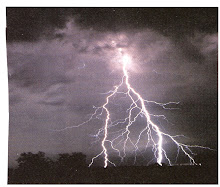
Hi Readers: Did you know that you can tell how far away a thunderstorm is from your position? Follow the lightning you see, count the seconds until you hear thunder. Then multiply your seconds times 1,128 - the speed of sound in ft/sec.
Moving on to Wind Shear. The subject, not all that well known to pilots and operators; and probably one of the most studied weather-related occurrences over the years, yet remaining highly misunderstood. In fact, the awareness factor is alarming. We have only to follow the thunderstorm and tornado reports, those originating from tropical air in the Southwest moving across the South and Midwest of the U.S., and the increased frequency of these storms in the past several years to find the source of our wind shear. Not that it doesn't occur in other areas of the world.
Wind shear is one of the more important weather-related occurrences, convective-type initiations; separate and distinct from known air turbulence, wake turbulence, mountain wave, jetwash, etc., that we should be aware of and include in our flight planning. Wind shear is directly related to downdrafts, microbursts, and convective vortex movements of air. The simple definition of wind shear is a sudden, drastic shift in winds speed, direction, or both in a horizontal and vertical plane. It's dangerous at any altitude, and particularly during surface operations such as approach, landing and takeoff. It can happen in airline or GA operations, VFR or IFR conditions, notably in connection with a cumulo-nimbus cloud or a thunderstorm.
Our cognizance of the hazards of wind shear must become full blown - the suddenness, the safety, and the fatal aspects are alarming; and the size and extent of the hazards are strictly after the fact.
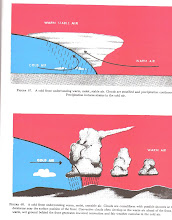
Let's start with the accepted fact that wind shear per se is hazardous and dangerous to flight by fact and experience. And, by nature, it is associated with convective air movements such as a thunderstorm, a cumulo-nimbus cloud, rain, a snowstorm, and downdrafts producing a microburst of air which sets up the wind shear and ends in a general flattening to the surface with vortex movements at each end. The total effects to airplane control are not instantaneous and can continue and progress from one stage to another; such as an increase or decrease of windspeed, which affects the airplane airspeed, and causes pitch control problems. The wind shear, as analyzed, is actually the result of the strong downdraft of air out of the center of the storm, called the rainshaft (rain or virga). This downdraft, or microburst of air, contacting the surface, then spreads out as much as 5 miles or more, horizontally and vertically, terminated by inward and upward moving vortices ( as explained before). It is estimated that 5% of all thunderstorms produce a microburst.
Indications in the cockpit to detect the microburst and wind shear seem to be the sudden airspeed variation, and the amount, a sudden pitch change, heavy turbulence, and a tendency to yaw or roll. The extent of the occurrence is, of course, unpredictable.
Airline encounters of wind shear have been on approach to land, landing, and takeoff. The typical approach occurrence is best illustrated by a 1985 encounter by Delta Air Lines, Flt 191, an L-1011 airplane, approaching the Dallas-Ft.Worth Intl airport, flying through a thunderstorm rainshaft, in which the developing microburst forced a landing short of the runway, resulting in fire and fatalities.
In another occurrence in 1999, American Air Lines Flt 1420, in attempting a landing at night at Little Rock, Arkansas, flew into a severe thunderstorm and crosswind, losing complete control. Similar circumstances to the Delta encounter occurred.
The typical takeoff and climb situations, encountering a microburst, resulting in wind shear, have similar cockpit indications, pitch control problems, and prevention of adequate climb past the runway.
Wind Shear - PartII will follow with Analysis.
Moving on to Wind Shear. The subject, not all that well known to pilots and operators; and probably one of the most studied weather-related occurrences over the years, yet remaining highly misunderstood. In fact, the awareness factor is alarming. We have only to follow the thunderstorm and tornado reports, those originating from tropical air in the Southwest moving across the South and Midwest of the U.S., and the increased frequency of these storms in the past several years to find the source of our wind shear. Not that it doesn't occur in other areas of the world.
Wind shear is one of the more important weather-related occurrences, convective-type initiations; separate and distinct from known air turbulence, wake turbulence, mountain wave, jetwash, etc., that we should be aware of and include in our flight planning. Wind shear is directly related to downdrafts, microbursts, and convective vortex movements of air. The simple definition of wind shear is a sudden, drastic shift in winds speed, direction, or both in a horizontal and vertical plane. It's dangerous at any altitude, and particularly during surface operations such as approach, landing and takeoff. It can happen in airline or GA operations, VFR or IFR conditions, notably in connection with a cumulo-nimbus cloud or a thunderstorm.
Our cognizance of the hazards of wind shear must become full blown - the suddenness, the safety, and the fatal aspects are alarming; and the size and extent of the hazards are strictly after the fact.
Let's start with the accepted fact that wind shear per se is hazardous and dangerous to flight by fact and experience. And, by nature, it is associated with convective air movements such as a thunderstorm, a cumulo-nimbus cloud, rain, a snowstorm, and downdrafts producing a microburst of air which sets up the wind shear and ends in a general flattening to the surface with vortex movements at each end. The total effects to airplane control are not instantaneous and can continue and progress from one stage to another; such as an increase or decrease of windspeed, which affects the airplane airspeed, and causes pitch control problems. The wind shear, as analyzed, is actually the result of the strong downdraft of air out of the center of the storm, called the rainshaft (rain or virga). This downdraft, or microburst of air, contacting the surface, then spreads out as much as 5 miles or more, horizontally and vertically, terminated by inward and upward moving vortices ( as explained before). It is estimated that 5% of all thunderstorms produce a microburst.
Indications in the cockpit to detect the microburst and wind shear seem to be the sudden airspeed variation, and the amount, a sudden pitch change, heavy turbulence, and a tendency to yaw or roll. The extent of the occurrence is, of course, unpredictable.
Airline encounters of wind shear have been on approach to land, landing, and takeoff. The typical approach occurrence is best illustrated by a 1985 encounter by Delta Air Lines, Flt 191, an L-1011 airplane, approaching the Dallas-Ft.Worth Intl airport, flying through a thunderstorm rainshaft, in which the developing microburst forced a landing short of the runway, resulting in fire and fatalities.
In another occurrence in 1999, American Air Lines Flt 1420, in attempting a landing at night at Little Rock, Arkansas, flew into a severe thunderstorm and crosswind, losing complete control. Similar circumstances to the Delta encounter occurred.
The typical takeoff and climb situations, encountering a microburst, resulting in wind shear, have similar cockpit indications, pitch control problems, and prevention of adequate climb past the runway.
Wind Shear - PartII will follow with Analysis.
Subscribe to:
Posts (Atom)