Hi Readers: Aviation Weather Services promolgated by the FAA, the NWS, and NASA are best described by and necessarily involve the actual flight, local or x-c, VFR and IFR flight plans; beginning with flight planning, and leading to en route flight, and terminating with descent and approach to land. In addition, the Weather Services provide an assist to the Controllers in preparing for the duties in which they are charged. Even local flights must be considered in terms of current weather - often pilots on local flights are caught in a sudden change of weather from VFR to IFR, as many of the aircraft accidents reveal.
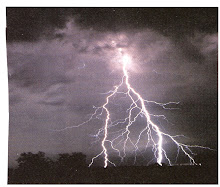
Weather is a 24-hour phenomenom, in constant change of its elements and phases. In 20 minutes a cloud ceiling may ascend or descend 2,000 feet, precipitation can change from rain to ice, and visibilities can become obscured or obliterated.
Since most weather services are tied to a specific phase of flight, let's plan a VFR x-c flight. Without getting into the details, we would either file a flightplan with AFSS/FSS by telephone using TIBS (Telephone Information Briefing Service), a recording of the destination current weather, or talking with a weather specialist concerning the destination current and forecasted weather (1-800-WxBrief- toll free). This is a Preflight Briefing to help the pilot determine a "go" or "no go" decision. Or, if you are computer-oriented, you may file a flight plan with DUATS(Direct User Access Terminal System) - toll free, and get alpha-numeric preflight weather data and file a domestic VFR or IFR flight plan.
We might use, in conjunction with our flight plan or separately, METAR (Aviation routine weather report) or an FA(an area forecast), if advantageous.
After takeoff, we are considered in an en route phase of flight and can utilize several services to our advantage.
Lest we forget, we can still communicate with AFSS/FSS on a common frquency of 122.2 or a discrete frequency for an individual station to file, activate, close, or change a flight plan; request an IFR clearance, contact ATCT/ARTCC for control; file position reports, pass PIREPS (Pilot weather reports); request status of Special Use Airspace; and request assistance in an inflight emergency.
Normally, we might use EFAS (En Route Flight Advisory Service) for nonroutine weather needs in flight or TWEB ( Transcribed Weather Broadcasts) for the routine weather needs in flight. Inflight advisories include SIGMET (Significant Meteorological Information), Convective SIGMETs, AIRMETs (Airmen Meteorological Information), FAs (Area Forecasts) , Winds Aloft Forecasts (176 locations in 48 States), and PIREPs (Reports by pilots of weather conditions in flight).
Descending from en route flight to approach and landing at our destination we might use any number of weather advisories, primarily that concerning the weather at the destination airport or terminal such as FA, LLWAS (Low level wind shear alert system), PIREPs, TAF(Terminal Area Forecast), and WW (Severe Weather Watch). And, of course, our continued communications, depending on VFR or IFR, with ARTCC, TRACON ( Terminal Radar Approach Control), ATCT, and following with GT (Ground Control) to the very end of our flight.
ATCT and TRACON both use air/ground communications, visual signals, and other devices to provide ATC services to aircraft operating in the vicinity of an airport. ATC services authorizes aircraft to land or takeoff at the airport controlled by the tower or to transit the Class D airspace area regardless of flight plan or weather conditions. A tower may also provide approach control services.
To put the aviation weather services in perspective, the pilot must deal with ARTCC, ATCT, and TRACON (as spelled out in AC 00-45F) with respect to their flight plan to effect location and positive control of the aircraft. TRACONs manage the airspace 10 to 400 miles outside of selected airports and below 13,000 feet. They also coordinate spacing as aircraft approach and depart airports. Terminal Controllers are knowlegeable of current weather conditions and are prepared to advise pilots of hazardous weather conditions within a 150 nm sector or area. Tower operators are certified to act as official weather observers.
The December 2007 aircraft Accident Accounting is in process.
Thanks for listening. R.S.
Showing posts with label airports. Show all posts
Showing posts with label airports. Show all posts
Thursday, January 3, 2008

Wednesday, September 5, 2007
CTAF and UNICOM
Hi readers: There has always been a certain amount of confusion regarding CTAF and UNICOM as to purpose, use, and where to find the information on both. Well, it has to do with in and out traffic and flight safety at and in the vicinity of airports operating without a control tower.
Why is this so important? It is essential that all pilots be aware of and communicate with other traffic when approaching, departing, and in the vicinity of an airport without a tower since all the aircraft may not have a communications ability. To achieve the highest degree of safety, all of the radio-equipped aircraft must transmit and receive on a common frequency for advisories. CTAF (Common Traffic Advisory Frequency) is the frequency that must be used for this purpose. The CTAF's for each airport are listed on aeronautical charts or in the FAA Airport Facility Directory or in other appropriate publications. The CTAF can be obtained by contacting any FSS (Flight Service Station), and you can communicate on a UNICOM frequency or a published CTAF.
What is UNICOM? UNICOM is a nongovernmental air/ground radio communications station which may provide airport information for public use airports where there is no tower or FSS. UNICOM stations provide pilots (on request) with weather information, wind direction, the recommended runway, and other necessary information. If the UNICOM frequency is designated as the CTAF, it will be be identified in the appropriate aeronautical publication.
If an airport has a tower and it is temporarily closed or operated on a part-time basis and there is no FSS on the airport or the FSS is closed, then the pilot must announce his position and intentions on the CTAF. Where there is no tower, FSS, or UNICOM station on the airport, a MULTICOM frequency of 122.9 is used for self-announce procedures. If there is no tower, but a FSS is open, you can communicate with the FSS on the CTAF. In retrospect, the CTAF may be a UNICOM, MULTICOM, FSS, or tower frequency, which all can be found in the aforementioned directory.
There are established, recommended traffic advisory practices in FAR, Chapter 4: Air Traffic Control, that pilots should note and use.
CTAF and UNICOM are very important, also, to all pilots in flight since an emergency can always occur and the need to communicate with an airport becomes very necessary.
Why is this so important? It is essential that all pilots be aware of and communicate with other traffic when approaching, departing, and in the vicinity of an airport without a tower since all the aircraft may not have a communications ability. To achieve the highest degree of safety, all of the radio-equipped aircraft must transmit and receive on a common frequency for advisories. CTAF (Common Traffic Advisory Frequency) is the frequency that must be used for this purpose. The CTAF's for each airport are listed on aeronautical charts or in the FAA Airport Facility Directory or in other appropriate publications. The CTAF can be obtained by contacting any FSS (Flight Service Station), and you can communicate on a UNICOM frequency or a published CTAF.
What is UNICOM? UNICOM is a nongovernmental air/ground radio communications station which may provide airport information for public use airports where there is no tower or FSS. UNICOM stations provide pilots (on request) with weather information, wind direction, the recommended runway, and other necessary information. If the UNICOM frequency is designated as the CTAF, it will be be identified in the appropriate aeronautical publication.
If an airport has a tower and it is temporarily closed or operated on a part-time basis and there is no FSS on the airport or the FSS is closed, then the pilot must announce his position and intentions on the CTAF. Where there is no tower, FSS, or UNICOM station on the airport, a MULTICOM frequency of 122.9 is used for self-announce procedures. If there is no tower, but a FSS is open, you can communicate with the FSS on the CTAF. In retrospect, the CTAF may be a UNICOM, MULTICOM, FSS, or tower frequency, which all can be found in the aforementioned directory.
There are established, recommended traffic advisory practices in FAR, Chapter 4: Air Traffic Control, that pilots should note and use.
CTAF and UNICOM are very important, also, to all pilots in flight since an emergency can always occur and the need to communicate with an airport becomes very necessary.
Saturday, August 4, 2007
NOTAMS
Hi Readers: Before we get started today - Did you know that the Morse Code was considered the first digital code and was the forerunner of the ASCII - the American Standard Code for Information Exchange based on the English alphabet. ASCII codes represent text in computers, communications equipment, and other devices that work with text. Look at your computer keyboard and you'll see the code.
Now continuing - Notices To Airmen are time-critical aeronautical information of a temporary nature or not sufficiently known in advance to permit publication on aeronautical charts. Such information could affect a pilot's decision to conduct or abort a flight. Look at any airport or facility on a Sectional chart (I'm sure you can find one) - this is the type of information that could change from day to day that might affect your flight plans. It could be an airport or runway closure; a change in the status of a navigational aid, or instrument landing system, or radar service, or other information essential to planned en route, terminal, or landing operations.
NOTAM information is transmitted throughout the Air Traffic and FSS (Flight Service System) network, using standard contractions to reduce transmission times. In Chapter 5 of the FARs, Air Traffic Procedures - Table 5-1-1-, you'll find the list of contractions used in the NOTAMS. There are some 288 contractions, some readily identifiable by glance, some not. There are three categories of NOTAMS, D - for Distant, L - for Local, and FDC - for Flight Data Center information. The categories are in detail with notes. Difficult reading - yes. However, I recommend that all pilots take the time to read and digest Chapter 5 at their leisure, prior to making x-c flights, particularly instrument flights, and get a good understanding of how the system works.
NOTAM D information is disseminated for all navigational facilities that are part of the National Airspace System. The complete file of all information is maintained in a computer database at the Weather Message Switching Center located in Atlanta, GA. The categories of information are distributed automatically via Service A Telecommunications Systems. FSS have access to the entire database.
To get NOTAM D en route and destination information you must contact your FSS and request all flight plan information needed from the the available air traffic facilities.
NOTAM L is basically local airport information, such as taxiway closures, personnel and equipment near the runways, airport lighting aids, et cetera, which you can get by contacting Ground Control or the local Tower.
The FDC (Flight Data Center) NOTAMS contain regulatory information such as amendments to instrument approach procedures, and other current information which are not yet published on charts. These NOTAMS are distributed from the national FDC in Washington D.C. and are kept on the files of FSS until published or cancelled.
The currency of a NOTAM is very important, and the pilot should keep abreast of the en route and destination changes by contacting the FSS's along the way. Once NOTAM information is published, the information is no longer provided to the FSSs, particularly for weather briefings, unless requested by the pilot.
In summary, pilots should be concerned with the D and L NOTAMS for x-c flight, paying strict attention to items pertaining to their flight plans, prior to filing those plans. In fact, there are any number of NOTAM contractions of the total that might apply, such as en route advisory service changes, minimum en route altitudes, radar coverages, ATIS services, airport lighting, air traffic control changes, adverse weather changes, ad infinitum.
As a pilot, I've always thought the NOTAM system was unduly complicated and cumbersome. The pilot has enough to do with just the flight planning; yet he must keep track of what is current and any changes that have been made during his en route flight and on to his destination. The system places these responsibilities on the pilot alone. However, I'll be the first person to say that I don't have a better plan. Maybe you do.
I must again emphasize the importance of NOTAM information for the pilot's flight planning, and, of course, the importance of filing a flight plan. And it's good to remember that the only information transmitted to the destination FSS will be your aircraft ID, type, destination, and estimated time en route. That means that all other information required for the flight must be obtained and processed by the pilot-in-command. The pilot has always been considered as responsible for the safety of the flight. And as a final note, he must not forget to close his flight plan. RS.
Now continuing - Notices To Airmen are time-critical aeronautical information of a temporary nature or not sufficiently known in advance to permit publication on aeronautical charts. Such information could affect a pilot's decision to conduct or abort a flight. Look at any airport or facility on a Sectional chart (I'm sure you can find one) - this is the type of information that could change from day to day that might affect your flight plans. It could be an airport or runway closure; a change in the status of a navigational aid, or instrument landing system, or radar service, or other information essential to planned en route, terminal, or landing operations.
NOTAM information is transmitted throughout the Air Traffic and FSS (Flight Service System) network, using standard contractions to reduce transmission times. In Chapter 5 of the FARs, Air Traffic Procedures - Table 5-1-1-, you'll find the list of contractions used in the NOTAMS. There are some 288 contractions, some readily identifiable by glance, some not. There are three categories of NOTAMS, D - for Distant, L - for Local, and FDC - for Flight Data Center information. The categories are in detail with notes. Difficult reading - yes. However, I recommend that all pilots take the time to read and digest Chapter 5 at their leisure, prior to making x-c flights, particularly instrument flights, and get a good understanding of how the system works.
NOTAM D information is disseminated for all navigational facilities that are part of the National Airspace System. The complete file of all information is maintained in a computer database at the Weather Message Switching Center located in Atlanta, GA. The categories of information are distributed automatically via Service A Telecommunications Systems. FSS have access to the entire database.
To get NOTAM D en route and destination information you must contact your FSS and request all flight plan information needed from the the available air traffic facilities.
NOTAM L is basically local airport information, such as taxiway closures, personnel and equipment near the runways, airport lighting aids, et cetera, which you can get by contacting Ground Control or the local Tower.
The FDC (Flight Data Center) NOTAMS contain regulatory information such as amendments to instrument approach procedures, and other current information which are not yet published on charts. These NOTAMS are distributed from the national FDC in Washington D.C. and are kept on the files of FSS until published or cancelled.
The currency of a NOTAM is very important, and the pilot should keep abreast of the en route and destination changes by contacting the FSS's along the way. Once NOTAM information is published, the information is no longer provided to the FSSs, particularly for weather briefings, unless requested by the pilot.
In summary, pilots should be concerned with the D and L NOTAMS for x-c flight, paying strict attention to items pertaining to their flight plans, prior to filing those plans. In fact, there are any number of NOTAM contractions of the total that might apply, such as en route advisory service changes, minimum en route altitudes, radar coverages, ATIS services, airport lighting, air traffic control changes, adverse weather changes, ad infinitum.
As a pilot, I've always thought the NOTAM system was unduly complicated and cumbersome. The pilot has enough to do with just the flight planning; yet he must keep track of what is current and any changes that have been made during his en route flight and on to his destination. The system places these responsibilities on the pilot alone. However, I'll be the first person to say that I don't have a better plan. Maybe you do.
I must again emphasize the importance of NOTAM information for the pilot's flight planning, and, of course, the importance of filing a flight plan. And it's good to remember that the only information transmitted to the destination FSS will be your aircraft ID, type, destination, and estimated time en route. That means that all other information required for the flight must be obtained and processed by the pilot-in-command. The pilot has always been considered as responsible for the safety of the flight. And as a final note, he must not forget to close his flight plan. RS.
Wednesday, July 11, 2007
Current Picture of U.S. Aviation
It's time we took a broad look at our aviation - where we are now and where we are going. Now that the Boeing Company has displayed its latest beauty - the 787 Dreamliner ( and a beauty it is), we'll get on our way. We don't have to look far or deep to see that we have major problems - some that have existed for some time and some that are just beginning. Actually, we need the Boeing Dreamliner at this moment to satisfy the ever-increasing demand of the air travelling population and to replace some of the smaller, ageing fleet of airline airplanes.
The airplane and its extended range of miles has made air travel available to all kinds of travelers - to anywhere - from 300 to 10,000 miles. There is no question that air travel is the primary mode of transportation. It has been reported by the Travel Industries Association that Americans will spend $733.9 billion in 2007, rising to $821 billion by 2010. Moreover, international visitors are pouring in, rising 7% annually.
But the travelers are having constant difficulties. There are flight delays, baggage problems, non-direct travel, airport security problems (often airports are suddenly closed due to terror threats leaving thousands of passengers stranded in airplanes on the tarmac without food and sustenance, causing rebooking with additional fees, and other problems). The airlines, large and small, are having scheduling problems, airspace control, security, and summer weather problem delays. Only a few of the high-altitude flying jets, with all the advanced digital equipment, manage the point-t0-point flight without delay.
The FAA is in the midst of a funding and next-generation planning crisis, trying to resolve problems before September 2007, when the Administrator's term expires. A new Administrator may not be appointed in time to take over some of the equipment and training problems. The Air Traffic Controllers have their problems and are asking for more money. Reportedly there is a shortage of Controllers and much of the advance equipment they need is not in evidence and many are not trained in the new equipment. FAA has proposed user fees for General Aviation (GA) operations (reportedly instigated by the airlines), which is currently being considered by both Houses of Congress. Congress appears ambivilent and not very knowledgeable concerning the everyday workings of aviation. The GA pilots are incensed regarding the prospect of user fees, and all say that they cannot afford the costs of user fees and will have to quit flying. AOPA and NBAA are fighting the battle for the GA pilots. Additionally, certificate fees are scheduled to be increased and fuel prices for 100LL octane and jet fuel are scheduled for higher taxes.
There is no doubt that we have a shortage of pilots - airline and otherwise -and the need will increase. Where are the future pilots coming from? Some airplane manufacturers are providing ground and flight training in their airplanes - particularly jet training. And there are hundreds of private Insructors begging for students. The response for pilot training has not been overwhelming.
Airports are being crowded out by aggressive Contractors who insist on building houses in established airport areas, too often condoned by local politicians. Part 135 Operators (Commuter and On Demand Operators) are now involved in renting or leasing jets and prop-jets because they cannot afford to buy them. And the problems go on.
I'm only one small voice, but I'm getting louder all the time. The truth of the matter is that the would-be pilot cannot afford high-cost training and equipment. It is time for Congressional oversite on all of these problems - our government should be the leader.
There are ways to sensible attack these problems. For starters, why not begin with a govt-sponsored ground and flight training for new pilots - on a competitive or low-cost basis - to provide pilots for GA, Part 135 and Part 121(airline) operations. For the oversite and operation of the FAA and the Airline problems, why not focus on a new Civil Aeronautics Board (or something similar) to provide stability and economic well-being.
We are not doing too well regarding safe flight, either. For the month of June 2007, NTSB reported 102 aircraft accidents, 26 fatal accidents accounting for 56 fatalities. GA accounted for 72 accidents, Air Carrier (Part 121) 6 accidents and incidents, and commuter Operations (Part 135) 5 accidents. Agriculture Operations (part 137) accounted for 7 accidents, and there were 2 Public Use accidents. The remainder were of foreign origin.
If you would like to hear more or if you have comments , please contact me. RS.
The airplane and its extended range of miles has made air travel available to all kinds of travelers - to anywhere - from 300 to 10,000 miles. There is no question that air travel is the primary mode of transportation. It has been reported by the Travel Industries Association that Americans will spend $733.9 billion in 2007, rising to $821 billion by 2010. Moreover, international visitors are pouring in, rising 7% annually.
But the travelers are having constant difficulties. There are flight delays, baggage problems, non-direct travel, airport security problems (often airports are suddenly closed due to terror threats leaving thousands of passengers stranded in airplanes on the tarmac without food and sustenance, causing rebooking with additional fees, and other problems). The airlines, large and small, are having scheduling problems, airspace control, security, and summer weather problem delays. Only a few of the high-altitude flying jets, with all the advanced digital equipment, manage the point-t0-point flight without delay.
The FAA is in the midst of a funding and next-generation planning crisis, trying to resolve problems before September 2007, when the Administrator's term expires. A new Administrator may not be appointed in time to take over some of the equipment and training problems. The Air Traffic Controllers have their problems and are asking for more money. Reportedly there is a shortage of Controllers and much of the advance equipment they need is not in evidence and many are not trained in the new equipment. FAA has proposed user fees for General Aviation (GA) operations (reportedly instigated by the airlines), which is currently being considered by both Houses of Congress. Congress appears ambivilent and not very knowledgeable concerning the everyday workings of aviation. The GA pilots are incensed regarding the prospect of user fees, and all say that they cannot afford the costs of user fees and will have to quit flying. AOPA and NBAA are fighting the battle for the GA pilots. Additionally, certificate fees are scheduled to be increased and fuel prices for 100LL octane and jet fuel are scheduled for higher taxes.
There is no doubt that we have a shortage of pilots - airline and otherwise -and the need will increase. Where are the future pilots coming from? Some airplane manufacturers are providing ground and flight training in their airplanes - particularly jet training. And there are hundreds of private Insructors begging for students. The response for pilot training has not been overwhelming.
Airports are being crowded out by aggressive Contractors who insist on building houses in established airport areas, too often condoned by local politicians. Part 135 Operators (Commuter and On Demand Operators) are now involved in renting or leasing jets and prop-jets because they cannot afford to buy them. And the problems go on.
I'm only one small voice, but I'm getting louder all the time. The truth of the matter is that the would-be pilot cannot afford high-cost training and equipment. It is time for Congressional oversite on all of these problems - our government should be the leader.
There are ways to sensible attack these problems. For starters, why not begin with a govt-sponsored ground and flight training for new pilots - on a competitive or low-cost basis - to provide pilots for GA, Part 135 and Part 121(airline) operations. For the oversite and operation of the FAA and the Airline problems, why not focus on a new Civil Aeronautics Board (or something similar) to provide stability and economic well-being.
We are not doing too well regarding safe flight, either. For the month of June 2007, NTSB reported 102 aircraft accidents, 26 fatal accidents accounting for 56 fatalities. GA accounted for 72 accidents, Air Carrier (Part 121) 6 accidents and incidents, and commuter Operations (Part 135) 5 accidents. Agriculture Operations (part 137) accounted for 7 accidents, and there were 2 Public Use accidents. The remainder were of foreign origin.
If you would like to hear more or if you have comments , please contact me. RS.
Subscribe to:
Posts (Atom)